


Automation Technology on Dry Bulk Cargoes Terminal
Abstract: By utilizing 3D laser scanning technology, precise positioning technology, and 3D modeling technology, fully automated production processes and operations of large equipment such as ship unloaders, stacker-reclaimers, and ship loaders at dry bulk cargo terminals can be achieved, along with information technology for port production and equipment. This will improve port logistics efficiency and intelligence, and promote the construction of smart ports.
Key words:
3D laser scanning
3D modeling
Precise positioning
Frequency converters and PLCs
Fully automated systems
Information technology
Smart ports
The dry bulk terminal automation control and information management system mainly includes nine parts: an integrated management and control platform, a dry bulk port IoT platform, a comprehensive production and operation management system, an intelligent yard management and scheduling system, an intelligent unloading control system, an intelligent truck unloading control system, an intelligent truck loading control system, an intelligent ship loading control system, and an intelligent stacking and reclaiming control system. The integrated management and control platform is primarily used for data communication and interaction between the underlying automatic control and information management layers. The port IoT platform includes a remote wireless temperature measurement system. The comprehensive production and operation management system has undergone several generations of technological updates and currently adopts a B/S architecture for integrated management and control upgrades, which is being promoted and applied in multiple port terminals. The intelligent yard management and scheduling system is still in the stage of continuous functional iteration, but its main functional modules have been maturely developed and applied. The intelligent stacking and reclaiming control system is a widely adopted port intelligent application in recent years, including technologies such as laser 3D scanning, automatic stacking and reclaiming control, and intelligent anti-collision. And promote the application of intelligent ship unloading control systems in multiple dry bulk cargo terminals, including technologies such as laser 3D scanning, automatic ship unloading control, and intelligent anti-collision. Intelligent ship loading control systems include technologies such as laser 3D scanning, automatic ship loading control, intelligent anti-collision, and coordinated control of material handling and loading. Intelligent unloading control systems can improve work efficiency. Currently, automatic tippers can complete the departure of 3 train cars within 50 seconds. Intelligent loading control systems are also gradually maturing, with continuously improving efficiency. They can perform continuous train loading operations according to the availability of train carts.
By connecting these production control, business, and production management systems through a multi-data source communication platform, seamless integration of production and management is achieved. This establishes two-way information exchange between the two, improving data real-time performance and enabling automated coordination of management and production processes. Production site systems such as stacker-reclaimer PLC control systems, GPS positioning systems, and video surveillance systems are organically linked with integrated production operations management systems and IoT platforms through the multi-data source communication platform. This builds a data exchange bridge between production control and production management systems, enabling coordinated operations from business acceptance, planning, production execution, warehouse management, financial settlement to customer service.
1. Automated Control System
In terms of control scope, the system covers single-machine loading and unloading equipment, belt conveyors, substations, rainwater pumping stations, wharf environment, and lighting and broadcasting. Fieldbus and Industrial Ethernet technologies, which have developed in recent years, are gradually being applied in port automation systems. Distributed control system architecture is replacing centralized control as the mainstream. In terms of detection, the system is equipped with relatively complete instruments for detecting signals such as flow, pressure, temperature, and quality related to loop control, safety production, and energy metering. In terms of electrical drives, AC frequency conversion technology for energy saving is widely used on large-scale loading and unloading machinery. However, its large-scale and systematic application on belt conveyors is still in its early stages. In recent years, with the development of laser scanning technology and 3D imaging technology, some attempts are being made to combine industrial knowledge, mathematical models, expert experience, and intelligent technology in the process modeling and optimization of ship loading and unloading operations. For example, applications such as fully automated stacking and reclaiming operations and fully automated ship loading and unloading operations have been promoted to a certain extent, and the technology has gradually matured.
1.1 Fully Automatic Control System for Ship Unloader
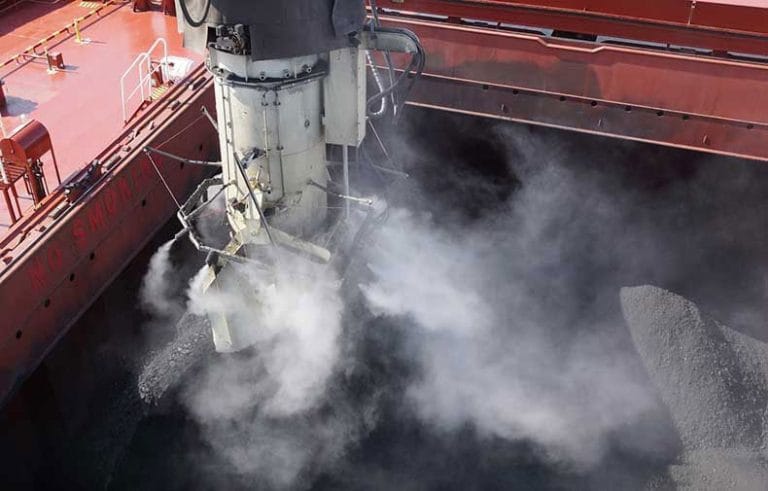
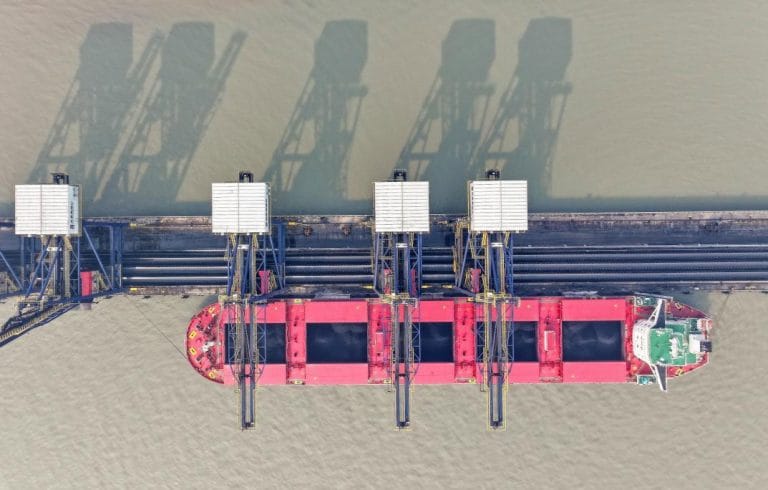
The automatic control system for the ship unloader is based on advanced grab bucket swing control and grab bucket path optimization technology. It provides three unloading control functions: semi-automatic, fully automatic, and intelligent automatic. In semi-automatic mode, material grabbing and ship type setting are completed by the driver; other processes are achieved by automatic control. In fully automatic mode, ship type setting is completed by the driver; other processes are achieved by automatic control. Intelligent automatic mode, based on fully automatic mode, adds a ship hold material scanning (laser scanning) system to complete ship type setting (ship hold height, hatch position) and material modeling. It automatically sets anti-collision protection and operating areas, reducing preparation time for automatic unloading and optimizing grabbing points. The advantages of automatic ship unloading control technology are: shortened cycle time, improved production efficiency, and reduced driver workload. The key technology in this part is ship hold material scanning (laser scanning). The system is used to complete ship type settings (cabin height, hatch location) and material modeling.
1.2 Stacker-Reclaimer Automatic Control System
The stacker-reclaimer automatic control system 2 employs a 3D laser scanning device to scan and mathematically model the outline of the stockpile. Based on optimization algorithms, the stacking and reclaiming paths are planned. Combined with precise positioning technologies for the trolley, pitch, slewing, and bucket wheels (GPS, Gray busbar, RFID, etc.), the stacker-reclaimer can be controlled to achieve automated stacking or reclaiming operations. Based on automatic stacking and reclaiming technology, a remote control system for stacking and reclaiming is also provided. The advantages of automatic stacking and reclaiming and remote control technology are: reduced manual intervention and labor intensity for operators; more stable flow control; reduced mechanical impact; reduced maintenance costs; providing accurate stockpile models for the yard management system; improved yard utilization and management level; and improved working environment for operators through remote control. The key technologies in this part are the yard material scanning (laser scanning) system, the precise positioning of major mechanisms, and material modeling.
1.3 Automatic Control System for Ship Loaders
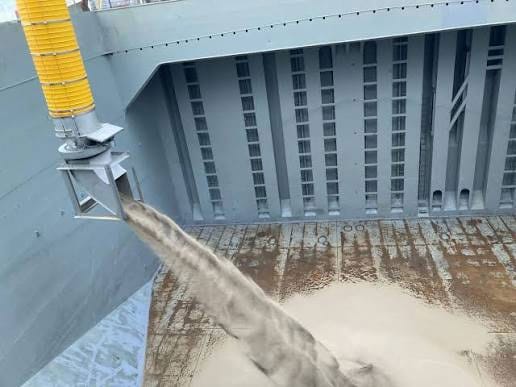
The automatic control system for ship loaders uses laser scanning sensors to scan and mathematically model the outline of the ship’s hold and materials. Based on optimization algorithms, it plans the loading path and load capacity, thereby achieving efficient, safe, and appropriate automatic loading operations. Automatic loading control technology can bring the following values to users: Automatically achieving load balancing during loading; effectively ensuring the safety of crane, ship, and dock workers; reducing manual intervention and labor intensity for operators. The key technology in this part is the ship’s hold material scanning (laser scanning) system, used to complete ship type setting (ship’s hold height, hold opening position) and material modeling; automatically achieving load balancing during material handling and loading, as well as the function of moving and transferring materials between holds.
1.4 Automatic Control System for Car Tippers
The automatic control system for car tippers utilizes PLC, remote communication technology, etc., to achieve automatic control and monitoring of car tippers at bulk cargo terminals from the central control room. It controls the production operation of car tippers in real time according to business needs and uses a remote video network to monitor the on-site work situation online, achieving the goal of centralized remote control of tipper operations from the central control room. The advantages of automatic control technology for car tippers are: remote centralized control of tipper operations; improved working environment for personnel; increased production efficiency; and reduced equipment maintenance costs.
1.5 Automatic Control System for Belt Conveyors
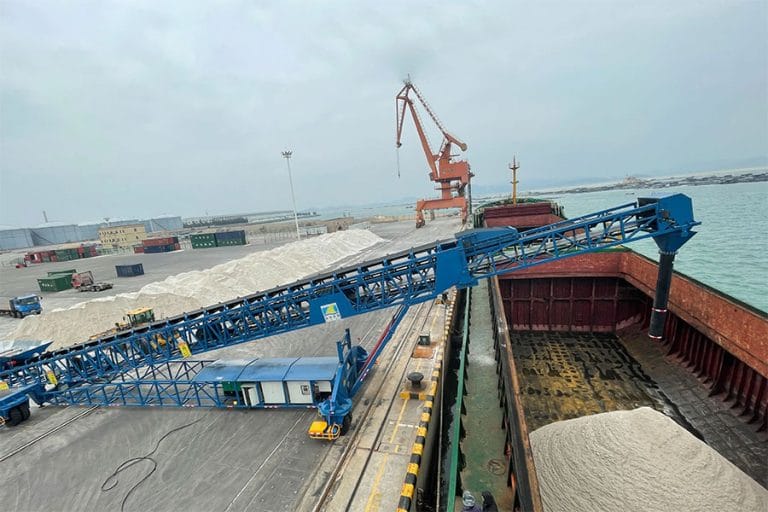
The automatic control system for belt conveyors utilizes PLC, sensors, network communication technology, etc., to achieve automatic control of belt conveyor devices at bulk cargo terminals. Based on material loading, unloading, stacking, and other entry and exit processes and management business needs, it formulates the process control logic for each belt conveyor combination, thereby realizing the mechanization of the terminal production process. Continuous and automated belt conveyor automatic control system has the following advantages: centralized control of belt conveyors, reduced labor costs, unified management to improve work efficiency, and remote equipment monitoring to reduce maintenance costs.
2. Production Management and Control System
The computer configuration rate of production management and control systems at dry bulk cargo terminals is already quite common. Functionally, there are many aspects related to report statistics and transaction processing. A few have proposed decision support and dynamic management and control functions. Currently, most port enterprises are developing towards integrated management and control, that is, based on the existing production management and control systems, comprehensively applying technologies such as operations research, expert systems, and process simulation to coordinate various process operations, conduct full-line logistics tracking, quality tracking and control, online cost control, equipment prediction and maintenance, etc., forming an organic combination of port production management and control. It mainly includes an integrated management and control system and a bulk cargo terminal equipment monitoring system.
2.1 Integrated Management and Control System
The integrated management and control system is based on the bulk cargo terminal production process control system. Through the processing, analysis, optimization, integration, and storage of information related to port enterprise production management and process control, it… Release, Establish a modern production management model covering enterprise production management and basic automation ꎬ Achieve organic integration of bulk cargo terminal management system and control system ꎬ Form a closed-loop management in the entire terminal logistics management and production control ꎮ The advantages of the integrated control system are: Managers at all levels can timely and intuitively understand the logistics loading and unloading situation and equipment operating status at the production site ꎬ Conduct comprehensive analysis of various operational data ꎬ Thus make decisions on various production activities ꎮ To unify the planning of resources in the entire port area ꎮ
2.2 Bulk Cargo Terminal Equipment Remote Monitoring System
Bulk Cargo Terminal Large Equipment Remote Management System (RCMS) — Based on PLC and various sensor devices ꎬ Real-time monitoring of the status and fault information of large mechanical equipment in the central monitoring room ꎬ And feed back equipment information and production execution results to the management system ꎬ Combine the monitoring and management functions of equipment ꎬ Realize equipment management, maintenance and inventory tracking functions ꎮ The advantages of the bulk cargo terminal equipment monitoring system are: It plays a bridging role between equipment monitoring and information management systems, reducing manual intervention and labor intensity for operators, and improving the efficiency of terminal equipment management and maintenance, as well as equipment utilization.
3. Production Information Systems
3.1 Bulk Cargo Terminal Production Management System
The bulk cargo terminal production management system connects terminal operations with customers, carriers, and other supply chain partners. It enables terminal and yard equipment scheduling, task and route management, ship berthing and loading/unloading planning, stacking and reclaiming planning, yard management, stockpile modeling, mix optimization, and cargo management, thereby achieving accurate data reporting. The advantages of the bulk cargo terminal production management system include: Developing detailed ship berthing and loading/unloading plans; Comprehensive understanding of terminal and yard operations; Viewing all predicted and real-time dynamic statuses; Real-time monitoring of stockpile and inventory information; Improved equipment utilization.
3.2 Bulk Cargo Terminal Digital Yard Management System
The bulk cargo terminal digital yard management system displays the overall layout and production process of the terminal and yard through a user-friendly graphical interface. It manages basic data information of stockpiles in the storage yard and provides query, statistical and other analysis functions. It receives work plans from the operation and management system, automatically generates optimized work instructions and sends them to relevant terminal and storage yard equipment for execution. The advantages of the bulk cargo terminal digital storage yard management system are: unified digital storage yard management improves work efficiency; reduces labor costs; optimizes production scheduling; and improves the level of intelligence. 3.3 Bulk Cargo Terminal Asset Management System The bulk cargo terminal asset management system is asset-centric and plan-driven. It can realize best business practices in enterprise asset management, work management, and material management. The design of the asset management process ensures that the assets of all departments are properly maintained, taking into account various factors such as equipment condition, safety, and risks. The main function of work management is to ensure that the work defined by the asset management process is carried out effectively. The purpose of material management is to control the inventory of maintenance spare parts. Balancing spare parts inventory that impacts operations. The advantages of a bulk cargo terminal asset management system are: Managing the entire lifecycle of enterprise assets; Plan-driven, real-time measurement and monitoring; Continuously improving asset performance; Providing true asset returns for the enterprise; Managing cost and benefit information of asset ownership across the entire enterprise by tracking operational status, asset location, maintenance history, capitalization, asset depreciation, income, and expenses; Reducing asset operating costs; Improving asset efficiency.
4. Conclusion
1) Modeling bulk cargo hold materials and yard materials using 3D laser scanning equipment and 3D imaging technology; Providing data for automated material handling by large loading and unloading equipment; Precise positioning technologies (such as GPS, Gray busbar positioning, and RFID radio frequency technology) provide location information for large loading and unloading equipment to reach designated areas for operations; Based on video technology development, providing data for obtaining relevant on-site information. This achieves full automation of the equipment.
2) Comprehensive application of operations research, expert systems, and process simulation technologies coordinates various process operations, expands functionality in areas such as full-line logistics tracking, quality tracking and control, online cost control, and predictive maintenance of equipment, forming an organic combination of port production management and control, and achieving integrated management and control.
3) Information technology addresses the comprehensive coordination of enterprise office, operation, production, equipment, materials, and energy, realizing information management of enterprise planning, scheduling, production, and equipment. Through dynamic monitoring of business flow, logistics, information flow, and capital flow, a comprehensive integrated information system for planning, scheduling, and operation production is created.