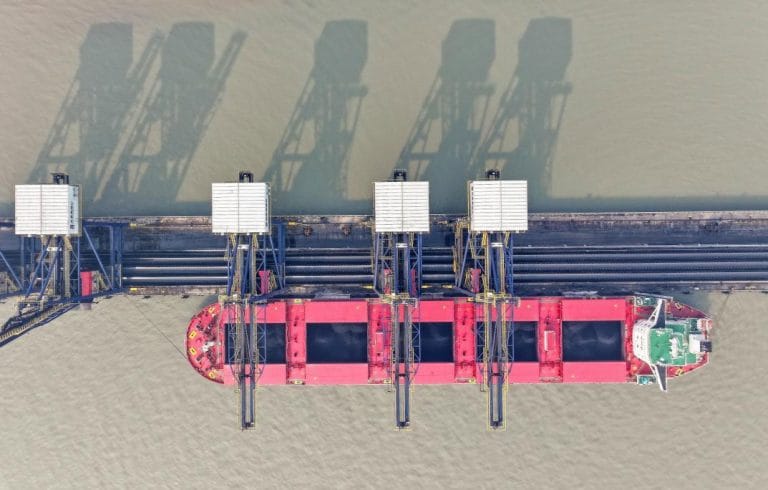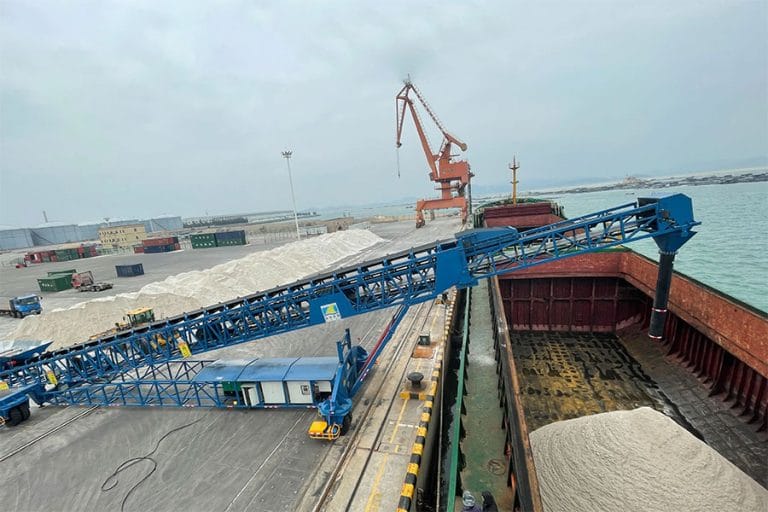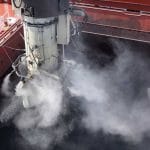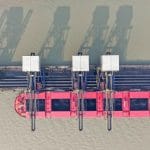



Bulk cargo ship loading operations at commercial ports face persistent environmental and operational challenges centered on airborne dust emissions. Ship loaders, the core equipment for transferring coal, grain, ore, cement, and other bulk materials from terminal conveyors to vessel holds, generate substantial fugitive dust during material transfer, freefall, and wind disturbance. Without effective ship loader dust control measures, these emissions lead to severe environmental pollution, safety hazards, equipment degradation, and non-compliance fines for port operators.
Modern port management prioritizes sustainable, eco-friendly bulk handling operations. Regulatory bodies worldwide have tightened dust emission standards for marine terminals, mandating real-time dust reduction and consistent environmental compliance. Beyond regulatory requirements, effective ship loader dust control protects on-site worker health, preserves cargo quality, extends equipment service life, and improves the surrounding community’s living environment. This comprehensive guide explores the root causes of ship loader dust emissions, mainstream dust control systems, professional operational best practices, compliance standards, and optimization strategies for modern bulk port terminals.
To implement targeted and efficient ship loader dust control, it is critical to identify the core sources of fugitive dust during loading processes. Most port dust emissions stem from four key operational links, all of which can be mitigated with tailored technical solutions and standardized management.
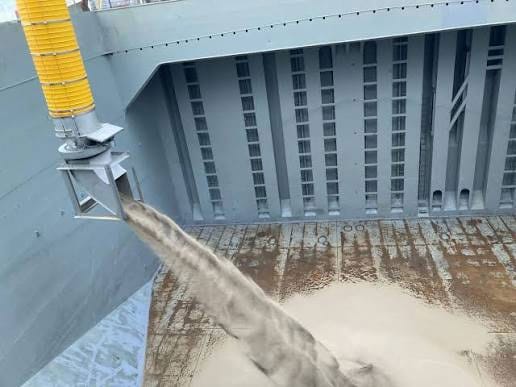
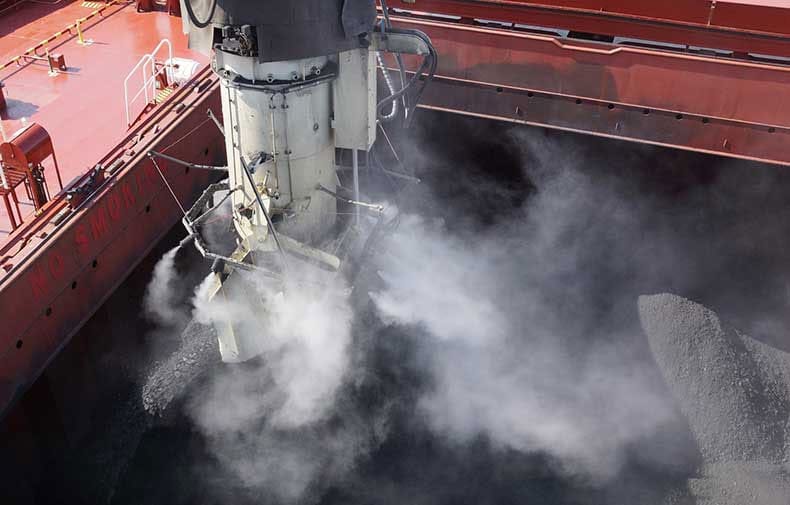
Traditional ship loading relies on fixed chutes with large vertical drop heights. When bulk materials fall freely from the loader boom into the ship hold, high-speed material movement entrains surrounding air, forming turbulent airflow that scatters fine particulate matter into the atmosphere. This is the primary cause of visible dust plumes during loading operations. The longer the freefall distance, the more intense the air turbulence, and the higher the concentration of fugitive dust produced.
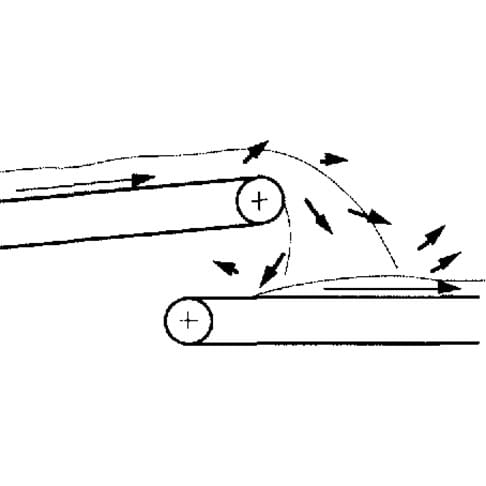
Material transfer between terminal conveyors and the ship loader boom creates impact friction and material dispersion. Unsealed transfer points lack effective dust containment, causing fine dust to escape continuously during material transportation. Worn conveyor belts, damaged rubber skirting, and misaligned material flow further exacerbate dust spillage at these critical junctions.
Ship loading operations are conducted in open-air port environments. Natural wind accelerates the diffusion of suspended dust in ship holds, spreading pollutants to dock areas, surrounding waters, and coastal communities. Open vessel hatches, necessary for loading, eliminate natural barriers for dust containment, making wind-induced dust diffusion an unavoidable challenge for traditional loading systems.
Dry, fine-grained materials such as grain powder, coal dust, and cement produce far more fugitive dust than large-particle bulk ores. Additionally, irregular operations—including excessive loading speeds, untimely chute height adjustment, and uncoordinated hatch management—significantly increase dust emission levels. These human and material factors often lead to inconsistent dust control effects even with complete equipment systems.
Modern port shiploader dust control systems combine passive containment, active suppression, and intelligent collection technologies. Integrating multiple solutions addresses dust generation at the source, during diffusion, and at emission endpoints, achieving efficient, stable, and low-energy dust reduction. Below are the most widely adopted and high-efficiency technical solutions for industrial port applications.
The telescopic chute system is the most foundational and effective passive dust control device for ship loaders, designed to eliminate dust caused by material freefall and air entrainment. The core working principle is to continuously adjust the chute extension length according to the height of the material pile in the ship hold, maintaining the chute outlet within 500mm of the cargo surface at all times. This minimizes material freefall distance, eliminates turbulent air entrainment, and fundamentally suppresses dust generation at the source.
High-performance telescopic chutes are equipped with multi-layer rubber skirting and annular sealing structures, which fully seal the gap between the chute and the material pile to prevent internal dust overflow. Advanced cascade chute designs further optimize material flow through inclined cone structures, slowing material falling speed, streamlining flow trajectories, and avoiding material dispersion. This design not only reduces dust emissions but also prevents cargo spillage and improves loading accuracy.
The dry fog dust suppression system is the mainstream active dust reduction technology for modern bulk ports, ideal for fine particulate dust control in grain, coal, and chemical material loading. Unlike traditional water spray systems that produce large water droplets affecting cargo quality, dry fog systems generate ultra-fine droplets (≤10μm) through high-pressure atomization. These tiny droplets fully bond with suspended fine dust particles, increasing particle weight and accelerating sedimentation without wetting bulk materials or causing cargo agglomeration.
Professional dry fog systems for ship loaders feature intelligent linkage control, automatically adjusting fog volume and atomization intensity based on real-time wind speed, loading volume, and dust concentration. Equipped with anti-freeze heating devices, the system adapts to low-temperature port environments and ensures stable operation year-round. For ports with strict emission standards, dual-mode switching systems combining dry fog and water spray further improve dust suppression efficiency for different material types.
Dust spillage at conveyor transfer points is a long-term hidden source of port dust pollution. A fully enclosed conveyor system covers the entire material transportation path of the ship loader boom with sealed dust covers, completely isolating internal material dust from the external environment. Double-layer dust curtains and wear-resistant rubber skirt seals are installed at all transfer joints and material contact positions to eliminate gap leakage.
Supporting air-knife belt cleaning devices and dual-stage belt cleaners remove residual fine material and dust on conveyor belts, preventing secondary dust pollution caused by belt operation. This holistic sealing solution controls dust generation in the entire material conveying link, forming a closed-loop dust control system for ship loading operations.
For high-dust and explosion-risk bulk materials such as grain and coal, negative pressure dust collection systems are essential supporting equipment. The system installs suction hoods at the loader chute outlet and ship hold opening, using high-power fans to form negative pressure inside the containment area. Fugitive dust that escapes source control is quickly sucked into the filter device, purified through bag filters, and discharged after reaching standards.
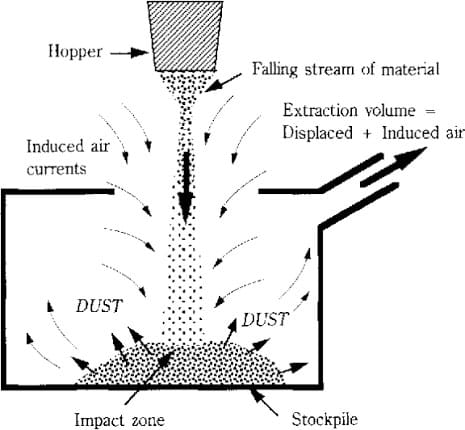
Modern self-cleaning dust collectors feature automatic ash cleaning and pressure monitoring functions, maintaining stable suction efficiency while reducing manual maintenance costs. For flammable and explosive dust scenarios, the system is equipped with explosion-proof and pressure relief devices, complying with international port safety codes and eliminating dust explosion risks.
Implementing standardized bulk ship loading dust suppression solutions delivers multi-dimensional value for port enterprises, covering environmental compliance, operational safety, economic benefits, and social reputation.
Global port environmental regulations continue to upgrade, with clear limits on PM10 and PM2.5 dust emissions from bulk loading operations. Effective dust control systems ensure real-time emission data meets national and international standards, avoiding administrative fines, production suspensions, and environmental assessment penalties caused by excessive dust emissions. It also supports port green certification and sustainable operation qualification reviews.
Long-term inhalation of industrial dust causes occupational respiratory diseases, posing serious health risks to dock workers. Dust accumulation on equipment surfaces also increases mechanical wear, electrical short-circuit risks, and dust explosion hazards for flammable materials. Comprehensive dust control reduces on-site dust concentration, optimizes operating environments, lowers occupational disease rates, and eliminates potential safety hazards in loading operations.
Fugitive dust contains a large amount of fine-grained cargo particles, leading to invisible cargo loss during long-term loading operations. Meanwhile, excessive dust and moisture interference from unqualified suppression systems affect cargo purity and storage stability. Professional dust control solutions minimize cargo spillage and particle dispersion, reduce economic losses, and ensure cargo quality meets delivery standards.
Suspended dust adheres to ship loader booms, conveyor rollers, motors, and electrical control components, causing accelerated equipment wear, reduced operational accuracy, and frequent failures. Stable dust control reduces dust accumulation on equipment, lowers maintenance frequency and replacement costs of wearing parts, and improves the overall operational stability and service life of ship loading equipment.
High-quality dust control relies not only on advanced equipment but also standardized daily operation and scientific management. Combining equipment advantages with operational specifications maximizes dust reduction effects and ensures long-term stable compliance.
Operators should adjust the telescopic chute height in real time according to the rising height of materials in the ship hold, always keeping the chute outlet close to the material pile. Avoid excessive freefall distance caused by delayed adjustment, which leads to sudden dust surges. Automatically controlled telescopic chutes can realize intelligent height tracking, reducing manual operation errors.
Suspend high-speed loading operations under strong wind conditions; appropriately reduce loading rates to weaken material turbulence and dust diffusion. Coordinate with ship crew members to close unused hatch covers during loading, reduce open-air dust diffusion areas, and form a relatively closed loading space inside the hold.
Establish a daily maintenance mechanism for dust control equipment: regularly check the sealing performance of telescopic chutes, the atomization effect of dry fog nozzles, the tightness of enclosed conveyor covers, and the operating status of dust collectors. Timely replace worn rubber skirts and blocked nozzles to avoid reduced dust control efficiency caused by equipment aging and failure.
Match different dust suppression modes according to material characteristics: use dry fog systems for dry, fine materials such as grain and cement to avoid moisture damage; adopt water spray and negative pressure collection combined systems for coal and ore materials; increase sealing strength for easily dispersed materials to achieve targeted dust reduction.
With the global promotion of green port construction, the port dust emission compliance standards for ship loading operations have been further updated. The 2026 International Grain Code amendments clearly classify grain dust as a high-risk explosive pollutant, requiring bulk grain terminals to equip integrated dust control and explosion-proof systems. Meanwhile, regional environmental departments have raised real-time monitoring requirements for port dust emissions, mandating online dust monitoring devices to achieve data traceability and transparent supervision.
The future development trend of ship loader dust control is intelligence, integration, and energy conservation. Intelligent linkage systems that integrate real-time dust monitoring, automatic equipment adjustment, and data cloud management have gradually become mainstream. New energy-saving dry fog suppression and low-negative-pressure dust collection technologies reduce terminal energy consumption while maintaining efficient dust reduction, helping ports achieve carbon neutrality and green upgrading goals.
Problem: Natural wind accelerates dust diffusion, leading to increased fugitive dust at the hatch opening even with complete equipment. Optimization: Add windproof dust curtains around the loader operating area, linkage-adjust dry fog intensity and negative pressure suction according to wind speed, and adopt segmented low-speed loading in strong wind environments.
Problem: Traditional water spray systems cause excessive material moisture, affecting cargo storage and sales. Optimization: Replace with ultra-fine dry fog systems, set intelligent atomization threshold control, and adopt intermittent spraying modes to ensure dust suppression without increasing material moisture content.
Problem: Traditional dust collectors and spray systems have high energy consumption and frequent failures. Optimization: Adopt self-cleaning energy-saving dust collectors and low-power dry fog equipment, establish regular maintenance schedules, and realize intelligent start-stop control to reduce invalid energy consumption.
Ship loader dust control is a core part of green port construction and standardized bulk cargo operation. It is not only a mandatory requirement for environmental compliance but also a key measure to protect operational safety, reduce cargo losses, and improve port economic and social benefits. Starting from the root causes of dust generation, adopting a combination of telescopic chute source control, dry fog active suppression, fully enclosed sealing, and negative pressure collection systems, combined with standardized operational management and intelligent optimization, can achieve full-process, efficient, and stable dust reduction for ship loading operations.
As environmental regulations become stricter and green port concepts continue to deepen, intelligent, energy-saving, and integrated dust control solutions will become the standard configuration for modern bulk terminals. Port enterprises should actively upgrade dust control systems, optimize operational processes, balance environmental protection and operational efficiency, and realize sustainable development of bulk ship loading businesses.