



Modern global trade relies heavily on efficient bulk cargo transportation, and port terminal productivity hinges on high-performance material handling machinery. Among all port equipment, the ship loader stands as the core workhorse for bulk cargo loading operations, enabling continuous, high-volume transfer of solid bulk materials from onshore storage, conveyor systems, and stockpiles directly into ship holds. Unlike traditional discrete lifting equipment such as cranes, ship loaders deliver streamlined, uninterrupted material flow, drastically cutting loading cycle times and improving terminal throughput.
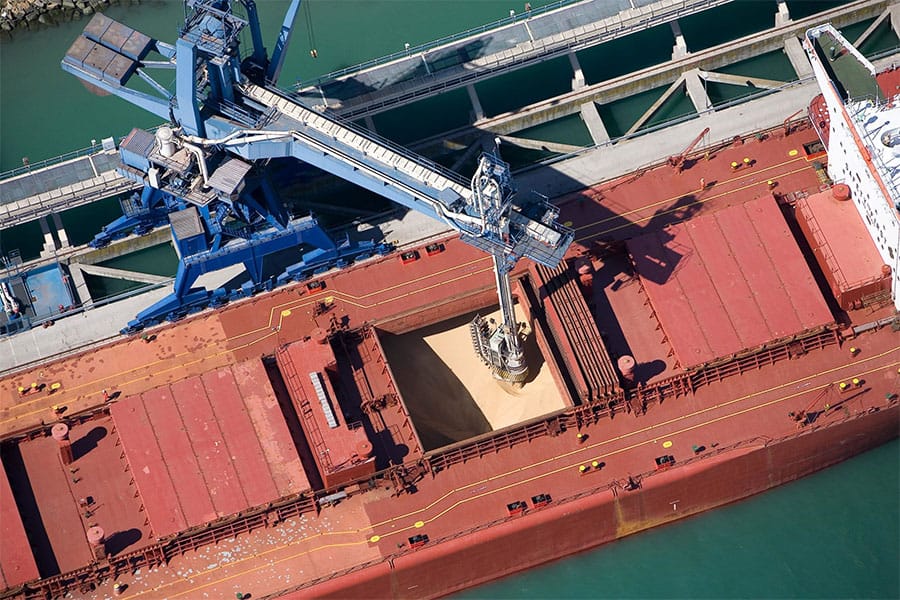
For port operators, logistics companies, and bulk material producers dealing with coal, ore, grain, cement, and fertilizers, investing in a reliable shiploader directly translates to lower operational costs, faster vessel turnaround, reduced labor reliance, and compliant eco-friendly operations. This comprehensive guide breaks down everything you need to know about shiploaders, including core definitions, classification, working mechanisms, key advantages, critical selection criteria, maintenance best practices, and frequently asked questions to help you make data-driven equipment decisions for your terminal.
A shiploader is a specialized heavy-duty bulk handling machine designed exclusively for loading loose bulk solids onto cargo vessels at port and marine terminals. It connects land-based conveyor infrastructure to ship holds, delivering continuous, regulated material transportation with adjustable positioning to adapt to varying vessel sizes, draft changes, and hatch layouts during loading operations .
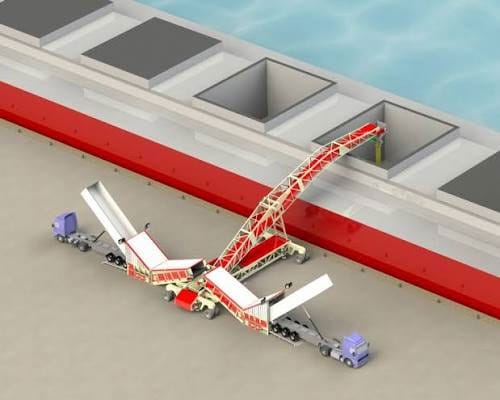
The primary mission of any ship loader is to eliminate intermittent loading delays, standardize material feeding rates, and maintain stable operational efficiency throughout vessel berthing and loading cycles. As vessels fill with cargo, their draft increases and deck height lowers; premium shiploaders automatically compensate for these water-level changes to avoid spillage, material waste, or equipment collision risks .
Beyond basic loading, modern ship loaders integrate multi-functional capabilities including dust suppression, material layer leveling, automated positioning, and real-time load monitoring. These features make them indispensable for modern smart port terminals that prioritize efficiency, safety, and environmental compliance.
A complete industrial ship loader consists of multiple precision-engineered components that work in tandem to ensure stable, high-efficiency operation. Each part plays a non-negotiable role in overall system performance and durability:
Ship loaders are categorized based on mobility, structural design, and application scenarios. Each type features unique advantages tailored for specific terminal scales, cargo types, and throughput requirements.
Mobile ship loaders are wheel or rail-mounted portable loading units with flexible mobility and independent operation. They require no fixed dock infrastructure installation, making them ideal for small and medium terminals, temporary berths, or multi-cargo loading scenarios .
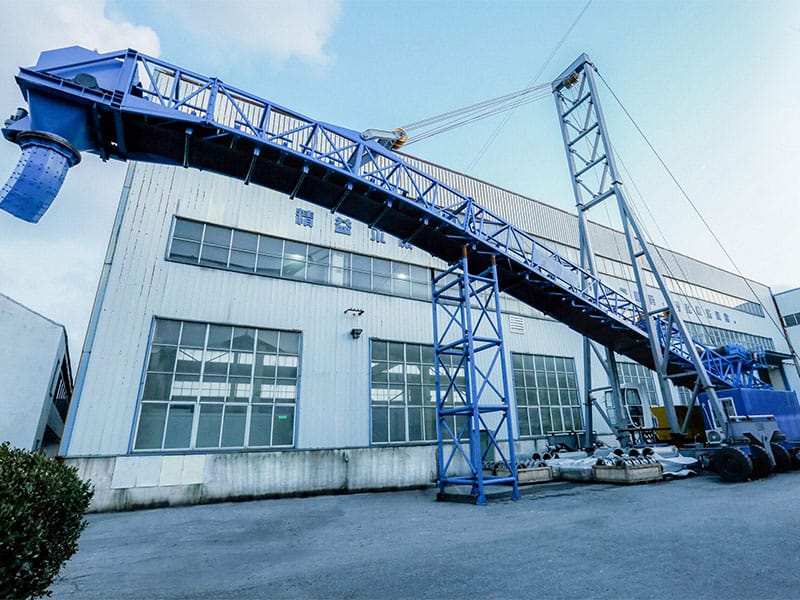
Key benefits include fast deployment, low construction investment, and flexible shift between different berths. Most mobile models support semi-automatic operation and are widely used for grain, fertilizer, and minor bulk cargo loading. Their compact structure also simplifies daily maintenance and transportation between terminal sites .
Fixed slewing ship loaders are anchored to a fixed dock foundation with 360-degree horizontal slewing and vertical luffing capabilities. This type delivers ultra-high stability and continuous loading capacity, making it the mainstream choice for large-scale professional bulk terminals .
High-end fixed slewing shiploaders achieve throughput rates of 2,000 to 6,000 tons per hour, supporting super-large bulk carrier loading efficiently . They are widely adopted for coal, iron ore, cement, and other heavy abrasive bulk materials.
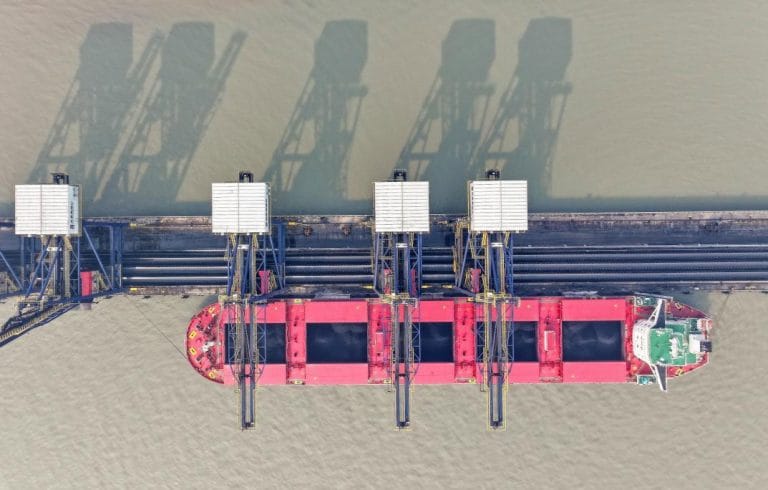
Rail-mounted travelling ship loaders run along dedicated dock rails, combining linear travelling and slewing positioning capabilities. They cover extremely long berth distances and serve multiple vessel berthing positions, maximizing terminal berth utilization.
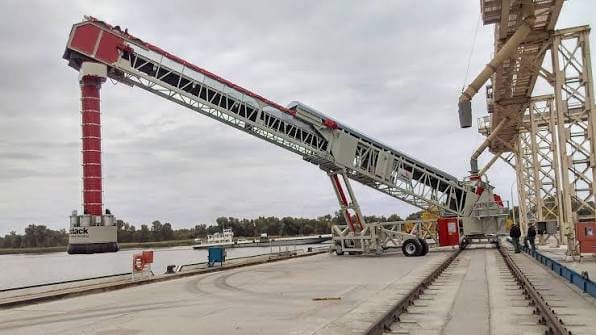
This type is commonly used in large-scale bulk shipping hubs with high daily shipment volumes, featuring stable operation, long service life, and full compatibility with automated terminal management systems.
Customized ship loaders are designed for specific cargo characteristics, including grain, cement powder, and coal ship loaders. Each customized model optimizes anti-wear performance, dust control, and material anti-segregation functions to adapt to unique cargo properties .
The working process of a standard ship loader follows a standardized, continuous workflow, ensuring efficient and orderly bulk loading:
Step 1: Pre-operation Positioning After vessel berthing, the operator controls the loader’s travelling, slewing, and luffing systems to align the telescopic chute directly above the target ship hatch, adjusting height to maintain a reasonable distance from the cargo hold bottom.
Step 2: Material Conveyance Initiation Onshore conveyor systems start transporting bulk materials to the ship loader’s transition conveyor and boom conveyor, achieving stable material feeding.
Step 3: Continuous Discharging & Position Adjustment Materials pass through the telescopic chute into the ship hold. During loading, the system automatically adjusts boom height to compensate for vessel draft changes and regularly shifts positions to evenly distribute cargo and avoid hull tilt .
Step 4: Dust Control & Real-Time Monitoring The dust suppression system operates synchronously throughout loading to control airborne particles. The PLC system monitors conveyor speed, material flow, and equipment operating status in real time to prevent overloads and blockages .
Step 5: Loading Completion & Reset After finishing single hatch loading, the loader repositions to adjacent hatches automatically. Once full vessel loading is complete, the equipment resets to standby position and shuts down safely.
Ship loaders support continuous non-stop loading, completely different from intermittent crane loading. High-capacity models reach 6,000 tons per hour, greatly shortening vessel berthing time, improving terminal annual throughput, and reducing vessel waiting fees for shipping companies .
Modern automated ship loaders support remote control and semi-automatic operation, reducing on-site operator requirements. Intelligent fault diagnosis and automatic positioning functions minimize manual intervention, cutting long-term labor and management costs for terminals .
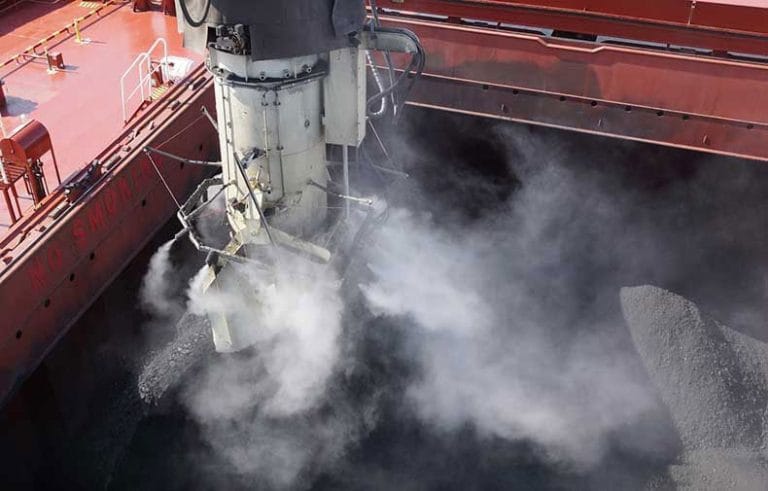
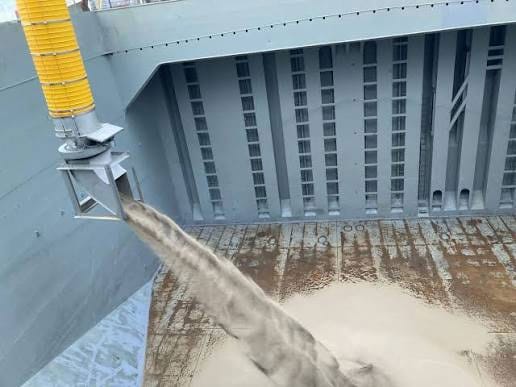
Telescopic chute design lowers material drop height, effectively reducing bulk material spillage, flying dust, and cargo segregation. This not only reduces material waste but also ensures uniform cargo stacking, improving overall shipment quality and reducing customer complaints .
Equipped with enclosed conveying structures and intelligent dust suppression systems, modern ship loaders effectively control port air pollution, fully complying with global environmental protection regulations for bulk port operations and helping terminals pass environmental assessments .
Standard ship loaders adapt to most bulk cargo types and various vessel sizes from small bulk carriers to large ocean-going vessels. They can be seamlessly integrated with existing terminal conveyor systems and upgraded with full automation modules as terminal operations expand .
Selecting a suitable ship loader directly determines terminal operational efficiency and return on investment. Consider these critical factors during equipment selection:
Scientific maintenance prolongs ship loader service life and ensures stable long-term operation. Key daily maintenance rules include regular inspection of conveyor belt wear, lubrication of slewing and travelling bearings, checking chute sealing performance, and cleaning dust suppression system nozzles .
For safety management, operators must conduct pre-operation equipment testing, prohibit overloaded operation, and lock equipment during extreme weather such as strong winds. Regular system calibration of automatic height adjustment and positioning systems is also required to avoid operational errors and safety hazards.
Standard ship loaders handle most bulk solids including grain, coal, iron ore, cement, fertilizer, sand, and mineral powder. Customized models can adapt to sticky, ultra-fine, or high-abrasion special bulk materials .
Mobile ship loaders feature flexible movement and low investment for small-scale and temporary operations. Fixed slewing ship loaders offer higher stability, larger throughput, and are suitable for large, high-frequency professional bulk terminals .
Yes. Modern premium ship loaders support full automatic operation including automatic positioning, layered loading, draft adaptive adjustment, and fault self-diagnosis, realizing unmanned intelligent loading for smart ports .
Adopt fully enclosed conveying structures, telescopic deep feeding chutes, and intelligent water spray dust suppression systems to minimize dust emission and meet environmental protection standards .
As the core equipment of bulk port terminal operations, the ship loader plays an irreplaceable role in improving loading efficiency, reducing operational costs, and realizing green and intelligent port development. Different types of ship loaders match diverse terminal scales, cargo types, and production demands, from flexible mobile models for small terminals to high-capacity fixed slewing models for large bulk hubs.
By understanding the working principle, core components, selection standards, and maintenance specifications of ship loaders, port operators can select targeted equipment solutions to maximize terminal productivity, optimize vessel turnaround efficiency, and gain competitive advantages in global bulk logistics transportation. With the continuous upgrading of smart port technology, automated, low-carbon, and high-precision ship loaders will become the mainstream development trend of the bulk handling industry in the future.